The Skill Wizard: how Context7 auto-generates AI coding skills from live docs
If you've spent any real time vibe coding with Claude Code, Cursor, or Codex, you already know the quiet rule: the model is only as sharp as the context you feed it. Hand it yesterday's API reference and it'll confidently write code that stopped working two releases ago. Give it a vague prompt and it'll happily invent functions that never shipped.
That's the problem Context7 set out to solve when it launched its documentation index for LLMs. And it's the same problem its newest release, the Context7 Skill Wizard, takes a step further. Instead of just handing your AI up-to-date docs on demand, the Skill Wizard writes the skill itself, grounded in those docs, and drops it straight into the editor you already use.
For anyone shipping code with AI agents every day, that's worth paying attention to. Here's what it does, why it matters, and where it fits.
The hidden tax of writing skills by hand
Skills, sometimes called agent skills or rules or custom commands depending on the tool, are basically reusable prompt packages. They bundle domain knowledge, constraints, and examples into a file the AI loads whenever a matching task shows up. Claude Code has them. Cursor has rules. Codex has instructions. OpenCode, Amp, and Antigravity all have their own variations of the same idea.
When a skill is good, it's genuinely useful. Your agent stops guessing how to write a Stripe webhook handler and starts following the exact patterns your team already agreed on. It validates inputs, emits the right telemetry, and structures files the way your codebase expects.
When a skill is stale, though, it's worse than no skill at all. The agent follows outdated instructions with the same confidence it'd follow good ones, and the resulting bugs are harder to catch precisely because the code looks deliberate.
Writing a genuinely useful skill by hand is more work than most people expect. You need to know the library well enough to capture the non-obvious parts. You need to understand what the model will and won't figure out on its own. You need to anticipate the edge cases that trigger hallucinations. And then you need to keep everything updated every time the underlying library ships a breaking change.
That last one is the killer. A skill written against LangChain 0.2 is actively dangerous by the time 0.3 ships. A Next.js 14 skill will lead your agent straight into deprecated APIs the moment you upgrade. Maintenance is a silent tax that compounds with every skill you add.
How the Skill Wizard works
The Context7 Skill Wizard is a CLI tool that generates skills for AI coding assistants by pulling from the live, official documentation Context7 already indexes. You describe the expertise you want, pick the docs it should ground against, answer a couple of clarifying questions, and it hands you back a ready-to-install skill with verifiable sources.
You launch it with:
From there, the wizard walks you through five steps:
- Describe the expertise in plain language. "Help me build Stripe subscription flows with webhook verification." "Write idiomatic LangGraph agents with proper state management." "Review React components for accessibility."
- Pick your documentation sources. The wizard surfaces relevant libraries from Context7's index and you choose the ones that matter.
- Answer clarifying questions. Are you on Stripe Connect or standard Checkout? Which version of LangGraph? TypeScript or Python?
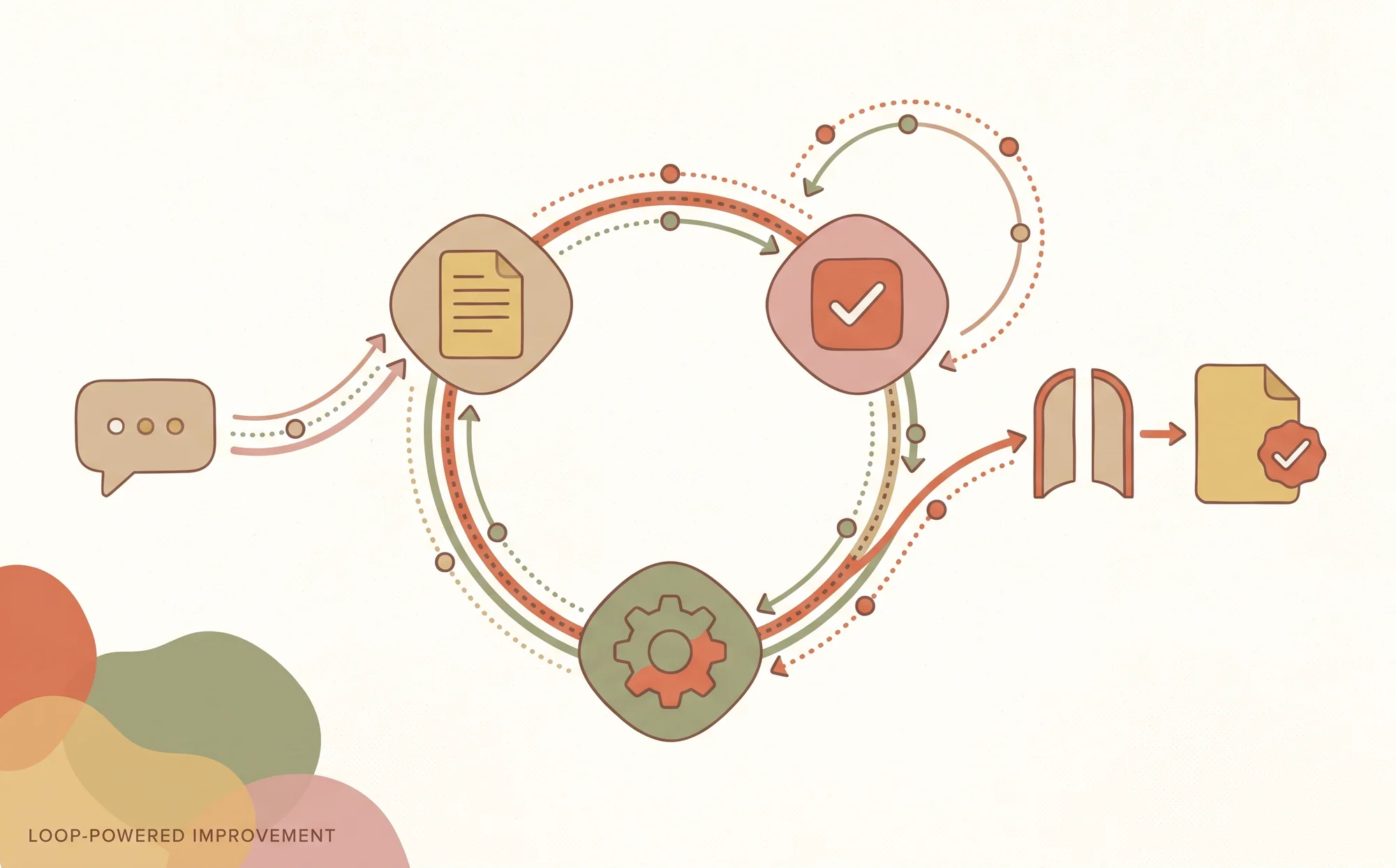
- Review the generated skill. You see the output alongside the exact snippets it pulled from. If something's off, you ask for changes in natural language and regenerate. Approved sections stay intact across iterations.
- Install. The finished skill drops straight into Claude Code, Cursor, Codex, OpenCode, Amp, or Antigravity. No manual copy-paste, no hunting for where each tool stores its rules.
Most skills take under five minutes end to end. Compare that to the hours it takes to write one well by hand, and the math changes.
Why grounding in live docs is the whole game
The phrase to pay attention to in the announcement is documentation-grounded generation. Sounds like marketing copy. It isn't. It's the difference between a skill that works and a skill that quietly lies.
Most AI-generated skills today are hallucinated. Someone asks ChatGPT to write "a rules file for working with Prisma," and the model emits something plausible-looking based on whatever Prisma knowledge happened to land in its training set. Maybe that data is from 2023. Maybe it mixes Prisma 4 and Prisma 5 patterns in the same paragraph. Maybe it references a method that never existed at all.
The Skill Wizard flips that. Instead of asking the model to remember Prisma, it fetches the current Prisma docs from Context7's index and treats them as the ground truth. You can watch the relevant snippets stream in during generation, so you can see exactly what the skill is based on. If a best practice changed in the last release, the skill reflects it. If an API was deprecated, the skill won't lead your agent toward it.
For anyone running AI agents on production code, this is the bar. Skills that are right on launch but wrong six weeks later aren't skills. They're a liability you haven't noticed yet.
Skills that are right on launch but wrong six weeks later aren't skills. They're a liability you haven't noticed yet.
What it unlocks for solo devs and teams
For a solo developer vibe coding a weekend project, the Skill Wizard is mostly a convenience. You get sharper output from your AI editor with almost zero setup, and you stop pasting half-remembered patterns from old Stack Overflow threads.
For a team shipping production software with AI assistance, it starts to look more like infrastructure. Four wins stand out:
- Standardize library usage across the team. Capture senior engineers' conventions as skills every agent loads automatically.
- Keep skills fresh on a schedule. Quarterly regeneration stops being a heroic effort.
- Onboard internal agents to your stack. Repeatable domain expertise for agent-driven workflows.
- Cut "the AI told me to do it" bugs. Grounded skills narrow the hallucination surface area.
You can standardize how your team uses libraries. Every team eventually develops opinions about the "right" way to use a given library, and those opinions are usually trapped in senior engineers' heads. The wizard gives you a fast way to capture them as skills every engineer's AI agent loads automatically. A new hire's Claude Code session starts with the same conventions as your staff engineer's.
You can also keep skills fresh on a schedule. Because generation is cheap and grounded in live docs, regenerating every quarter, or before a big release, or after a major dependency bump stops being a heroic effort. It's just a Tuesday.
You can onboard internal agents to your stack. If you're building agent-driven workflows or multi-agent systems, the wizard is a repeatable way to teach each agent the slice of domain expertise it needs without hand-writing a wall of prompt text for every one.
And you can cut the "the AI told me to do it" class of bugs. One of the subtler costs of AI-assisted dev is the case where an agent confidently does the wrong thing and the developer accepts it because the code looks reasonable. Grounding skills in real docs doesn't eliminate that, but it narrows the surface area a lot.
Where this fits
The last two years of AI coding tools have been a race to give models better context. First it was bigger context windows. Then retrieval over codebases. Then custom instructions and rules files. Then Claude Skills, Cursor rules, and their cousins.
The Skill Wizard is the next move, where the context layer itself becomes automated and self-updating. You no longer write the instructions your AI needs. You describe the problem, point at the sources, and let a tool synthesize something that stays true to those sources over time.
Context7 isn't the only company moving in this direction, but pairing an existing docs index with a generation layer on top is a cleaner setup than most of what's out there. It treats documentation as the source of truth, then lets you turn that truth into reusable agent expertise on demand.
The roadmap makes the ambition clearer. Upcoming releases will ship complete skill packages with scripts, references, and asset directories, plus direct publishing to the Context7 registry from the CLI. Skills are moving from hand-crafted text files to shareable, versioned, installable artifacts. That's the direction every mature tooling ecosystem eventually takes, and honestly, it's overdue here.
Getting started
If you already use an AI coding assistant, trying it takes about two minutes:
- Install Node.js if you don't have it.
- Run
npx ctx7 skills generate. - Walk through the flow for a library you actually use day to day.
- Install the skill into your editor of choice and try it on a real task.
Start narrow. A skill for how your team writes Stripe webhook handlers. How you structure LangGraph state. The accessibility rules you enforce on React components. The narrower the scope, the better the results tend to be.
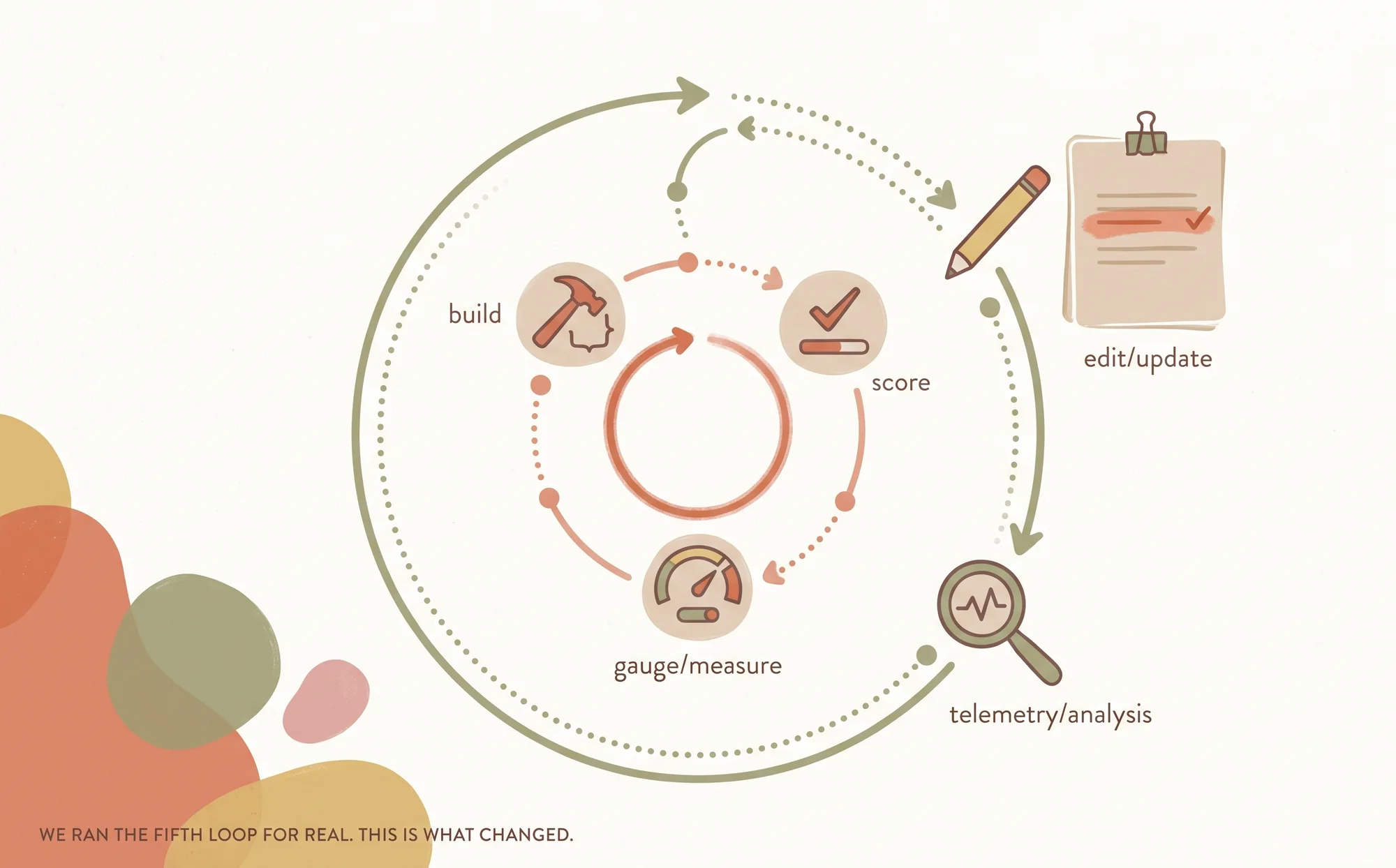
When it doesn't get something right on the first pass, use the feedback loop. Tell it what to change, regenerate, and watch the approved sections stay intact. That loop is probably the most underrated piece of the whole tool. It turns skill authoring into a conversation instead of a writing assignment.
The bet underneath it
Here's what I keep coming back to. The Skill Wizard is a small tool making a large implicit argument: that the future of AI-assisted development isn't just about more powerful models. It's about the infrastructure around them. The docs layer. The skills layer. The way teams capture and share expertise with their agents.
Get that infrastructure right and a mid-size team with strong conventions can ship software that feels like it came from a much larger one. Get it wrong and your agents will confidently write last year's code forever.
At Atharvix, we spend a lot of time thinking about this layer, because it's where most of the practical wins in AI-assisted engineering actually come from. Better models help. Better context helps more. Tools like the Skill Wizard are early signals of where that context layer is going, and they're worth paying attention to even if you don't adopt them on day one.
The Skills story doesn't end with coding assistants. The next piece in this series goes somewhere most enterprise AI conversations haven't caught up to yet. Worth a read when it lands.
Bringing AI agents into a real engineering workflow is where most teams get stuck—not on the models, but on the skills, guardrails, and context around them. That's the work we do at Atharvix. Talk to our team if you want a second set of eyes on yours.